The Architecture of Seasonality: A Kyoto Feast
How Japan’s seventy-two ancient micro-seasons translate into earthenware ceramics, wild mountain herbs, and quiet dining chambers.
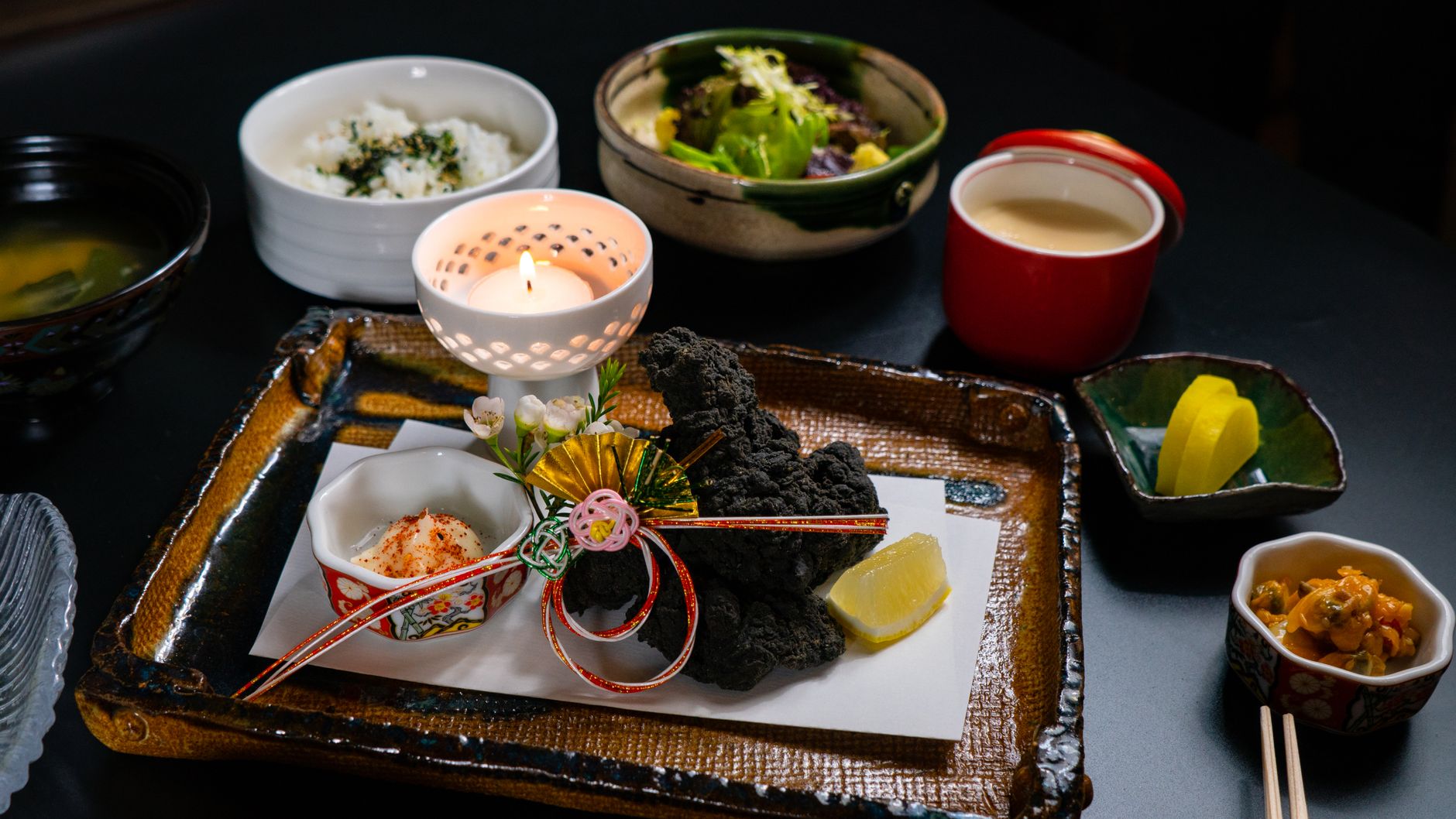
Seasonal autumn broth and hand-carved persimmon vessel. Photography by 111111.
Table of Contents
1. The 72 Micro-Seasons of Kō
While the contemporary Western calendar divides the year into four broad quarters, classical Japanese natural philosophy recognized twenty-four sekki, subdivided into seventy-two kō, each spanning roughly five days. In Kyoto, this acute sensitivity to transience is not merely a poetic ideal; it is the fundamental framework of high culinary art.
When bamboo shoots pierce the cold loam for a mere week in early spring, or wild matsutake mushrooms emit their earthy perfume following the first autumn frost, the dining table transforms into an explicit calendar of the soil.
2. The Ceramic Dialogue
In a traditional machiya townhouse overlooking a moss garden, food cannot be divorced from its vessel. A cracked Oribe glaze mimics the fractured ice of melting streams, while rough Bizen stoneware honors the volcanic clay beds of southern Honshu. The chef does not merely cook; he curates an encounter between mineral, timber, and harvest.
Each dish arrives as an understated installation. The silence of the dining room—broken only by the murmur of the garden stone basin—forces the diner to listen to textures and scents that would otherwise be obliterated by urban bustle.
3. Approaching the Table with Reverence
To experience true Kaiseki dining is to surrender desire for speed. Arrive on time, leave electronic distraction in your room, and appreciate that every cut of the sashimi knife represents decades of lineage and apprenticeship.